_(1).png)
Small Kitchen, Big Upgrade: Smart Layouts Vernon Hills Homeowners Swear By
- Oct 29, 2025
- 7 min read
If you live in Vernon Hills, you probably know the feeling: your kitchen works… until it doesn’t. Mornings turn into traffic jams around the coffee maker, the dishwasher blocks a drawer when it’s open, and that corner cabinet has basically been a black hole since 2012. The good news? You don’t need to knock down walls to make a small kitchen feel bigger and work smarter. With a tight layout plan, a few strategic updates, and a pro who pays attention to the inches (not just the feet), you can transform the way your kitchen looks and cooks.
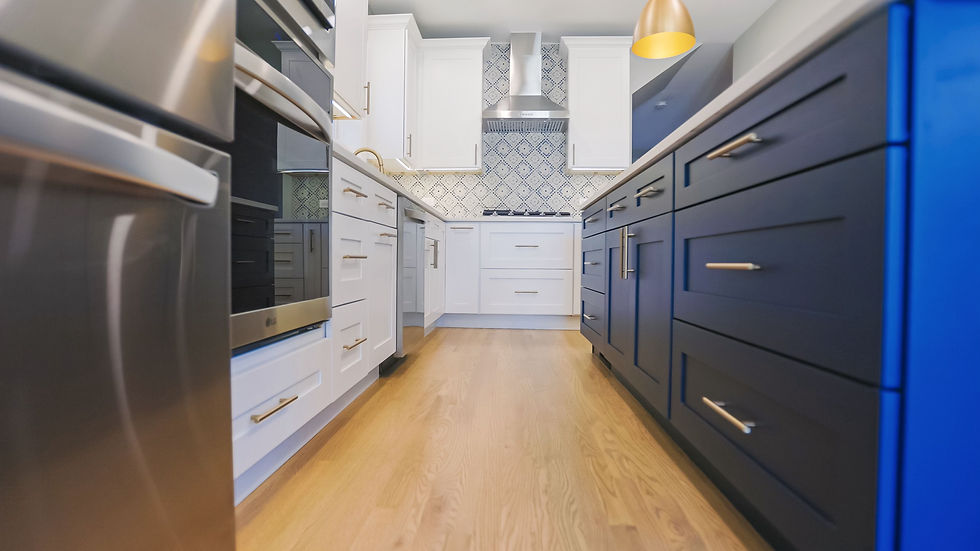
This guide breaks down the layouts, placements, and finishes that Vernon Hills homeowners keep choosing—because they genuinely make daily life easier. We’ll show you where small kitchens get stuck, what changes free up flow, and how to stretch storage and style without stretching the budget.
(Explore our work in the Gallery and see how these ideas look in real homes. When you’re ready, start with a quick Get a Quote—we’ll map your space and bring options.)
Why “Small” Isn’t a Problem—It’s a Design Advantage
In a compact footprint, every decision delivers more impact. Shorter runs mean fewer steps, tighter zones mean quicker prep, and right-sized appliances open up storage you didn’t think you could fit. When we remodel in Vernon Hills, the biggest wins usually come from:
Re-thinking circulation. Make sure no door swing or appliance blocks another task.
Right-sizing appliances. A counter-depth fridge or 24" dishwasher can buy you critical aisle width.
Using vertical volume. Ceiling-height cabinets and a tidy lighting plan bring order and brightness.
Finishes that bounce light. Flooring and paint choices can visually widen a room (more on that below).
(Curious how this looks in your home? See Kitchen Remodeling for process and options.)
Start With Flow: The Two Traffic Questions
Before we touch finishes, we draw the paths people take:
Entry to fridge: Is there a straight shot from the entry to the refrigerator so kids can grab snacks without crossing the cook zone?
Sink to range to fridge: Does the working triangle (or zone layout) avoid crisscrossing with pass-through traffic?
If you fix these two paths, the rest of the remodel gets easier. We often slide a fridge down 12–18 inches, swap a swing door for a pocket door, or rotate a peninsula—tiny moves with outsized results.
Triangle vs. Zones (and Which Works Best in Small Kitchens)
Classic Work Triangle (sink–range–fridge): Great in compact L- or U-shapes where the cook is mostly solo.
Work Zones (prep, cook, clean, coffee, bake): Better for families who share the space. For instance, a “coffee zone” by the fridge (with mugs and the brewer) keeps morning traffic out of the cook lane.
In many Vernon Hills kitchens, we blend both: a tight triangle for the main cook, plus a micro zone for snacks or coffee that doesn’t interrupt dinner.
Layouts That Over-Deliver in Tight Spaces
1) Galley (Two Straight Runs)
Why it works: Parallel counters with a clear aisle (ideally 42") cut steps and keep everything reachable.
Upgrades that matter:
Sink centered opposite the range for head-down efficiency.
Pull-outs in base cabinets so you never crawl into a corner.
Counter-depth fridge flush with cabinets to maintain aisle width.
A slim 24" dishwasher (still full-capacity) adjacent to the sink with a drawer stack on the other side for prep tools.
Pro move: Add a shallow pantry cabinet (12–15") on the end run with full-height doors—huge storage without stealing aisle space.
2) L-Shape With Micro-Peninsula
Why it works: You get uninterrupted prep along one leg, then a perch for seating or serving on the short “peninsula” leg.
Upgrades that matter:
Tuck microwave drawer into the peninsula to free upper-cabinet space.
Use the corner for a LeMans or blind-corner pull-out, not dead storage.
Place the dishwasher on the peninsula side to keep the main L leg clean for prep.
Pro move: Radius the peninsula corner slightly—so people can slide by without catching a hip.
3) U-Shape With One Opening
Why it works: Maximum counter and storage; the cook stands in the U for a tight triangle.
Upgrades that matter:
Keep at least 42" inside the U so doors and knees aren’t fighting.
Use drawer bases (not just doors) on both sides of the range for pots and utensils.
Put trash/recycling pull-out between sink and range to keep cleanup central.
Pro move: If your kitchen opens to a dining area, lower one U leg to table height to create a breakfast nook without adding footprint.
4) One-Wall With Island (or Mobile Cart)
Why it works: When you truly can’t spare aisle width, a sleek one-wall keeps everything in line, while a rolling cart or narrow island adds prep when you need it.
Upgrades that matter:
Induction range with a slim profile and safer, cooler surface (great for small homes).
Tall pantry tower at one end with built-in broom/utility compartment.
Open shelves for everyday dishes to reduce door swings and visually lighten the wall.
Pro move: A mobile butcher-block cart parked near the fridge becomes a snack/coffee zone on weekdays and a prep station on weekends.
Appliance Sizing: Inches That Change Everything
Refrigerator: Counter-depth (typically 24–27" case) aligns with cabinets so the door swing doesn’t eat the aisle. French doors plus a bottom freezer are ideal in tight rooms.
Dishwasher: A high-quality 24" slim model is often plenty; panel-ready keeps the look streamlined.
Range/Cooktop: A 30" slide-in cleans up the sightline; consider induction for speed, safety, and more drawer room below.
Microwave: A drawer microwave in a base cabinet or peninsula is ergonomic and frees the eye line.
Hood: Low-profile wall hood or a built-under insert inside a cabinet keeps things visually calm.
Storage Playbook for Small Kitchens
Drawer bases everywhere. Three-drawer stacks beat doors for pots, pans, and mixing bowls.
Pull-outs: Spices (9–12"), sheet pan dividers, oil/vinegar caddies by the range.
Corner solutions: LeMans, Magic Corner, or blind-corner pull-outs—anything but a dark void.
Toe-kick drawers: Rarely used platters and baking sheets live here.
Ceiling-height uppers: Add a second row for seasonal items; finish to the ceiling with a clean crown.
Inside-door storage: Cutting boards, wraps, and cleaning tools mounted to the door backs.
Message/charging niche: A shallow cabinet with a flip-up door and outlets keeps counters clear.
Lighting & Surfaces: Make the Room Feel Larger
Layered lighting (the small-kitchen secret):
Recessed or low-profile downlights for an even wash.
Under-cabinet LEDs for shadow-free prep (put them on a separate dimmer).
A simple statement: one small pendant or a compact linear over the peninsula—scale matters.
Flooring (see our Flooring Service):
Large-format porcelain with tight grout lines visually widens the room.
LVP is quiet, warm underfoot, and forgiving with kids and pets. Choose a mid-tone wood look to hide crumbs and still reflect light.
Paint (see House Painting):
Walls in a light neutral with a touch of warmth (think soft greige) to avoid a sterile feel.
Ceiling and trim a notch lighter to lift the eye.
If you love color, confine it to a single accent cabinet or a pantry door so it energizes without shrinking the space.
Counters & backsplash:
Matte or satin quartz in a light tone for bounce and durability.
Stacked 2x8 or 3x12 tile laid vertically draws the eye up; keep grout close to tile color for a quieter read.
The Coffee & Snack Zone (Peacekeeper of the Morning)
A dedicated landing for mugs, beans, snacks, and a small sink (optional) turns chaos into order. Place it near the fridge but outside the cook triangle. Add a narrow trash pull-out and a shallow drawer for spoons and tea bags. This single change is often what families rave about months later.
Budget-Smart Upgrades That Move the Needle
You don’t need a gut reno to get results. Prioritize:
Relocate the fridge (even 12–18") to fix traffic.
Switch to drawer bases in the main prep zone.
Add under-cabinet lighting and brighten the paint palette.
Right-size to a counter-depth fridge and slim dishwasher.
Upgrade the backsplash to a vertical stack pattern to “stretch” the wall.
Combine two or three of these and your kitchen will look redesigned—even if the footprint stays exactly the same.
Real-World Mini Case: “We Need Two Cooks, Not Two Collisions”
A Vernon Hills couple had a tight L-shape. The microwave lived over the range, the fridge door clipped the island stool, and the dishwasher blocked the only drawer with spatulas. We:
Moved the fridge 15" toward the breakfast nook and swapped to counter-depth.
Replaced the OTR microwave with a hood insert, and added a microwave drawer in the peninsula.
Converted two base cabinets to three-drawer stacks and installed a 12" spice pull-out.
Painted the walls a soft neutral, took uppers to the ceiling, and added under-cab LEDs.
No walls moved. They now cook side-by-side without a single hip-check.
Timeline, Permits, and What to Expect
Design & selections: 1–3 weeks (measure, 3D concept, appliance specs, finishes).
Lead times: Vary by cabinets and appliances; we’ll stage starts around deliveries to keep downtime minimal.
Build: 1–3 weeks for a light refresh; 4–6+ for cabinet and layout changes.
Permits: Needed if we’re moving plumbing, electrical, or adding circuits; we handle the paperwork and inspections for Lake County/Vernon Hills requirements.
Dust & protection: Zip walls, floor protection, daily cleanup—especially important in small homes.
(Peek at our Gallery to see kitchens like yours at each stage.)
Quick Checklist: Small-Kitchen Wins
42" main aisle (minimum 36" if truly tight)
Counter-depth fridge; verify door swing clearances
Drawer bases in main prep zone
Trash pull-out between sink and range
Under-cabinet lighting on a dimmer
Microwave drawer or dedicated niche
Coffee/snack zone outside the triangle
Ceiling-height uppers; clean crown to ceiling
Large-format flooring; light, low-contrast counters
One statement light, right-sized
Ready to Make Your Small Kitchen Work Bigger?
We’ve helped Vernon Hills homeowners turn cramped, cluttered kitchens into bright, efficient spaces without touching a single load-bearing wall. If you want that kind of practical, everyday transformation, we’d love to help plan it with you.
Explore Kitchen Remodeling for process and options
Browse finished projects in our Gallery
Compare surfaces via our Flooring Service
Refresh walls and trim through House Painting
Or jump straight to Get a Quote—we’ll measure, map, and give you clear choices and pricing


Comments